
“You have my attention, tell me more!” What book tropes make you say that?
These are some of my favourites from the mystery and romance genres:
- Everyone has a motive
- Enemies to lovers
- We’re snowed in
- Slow-burn romance
- Locked-room mystery
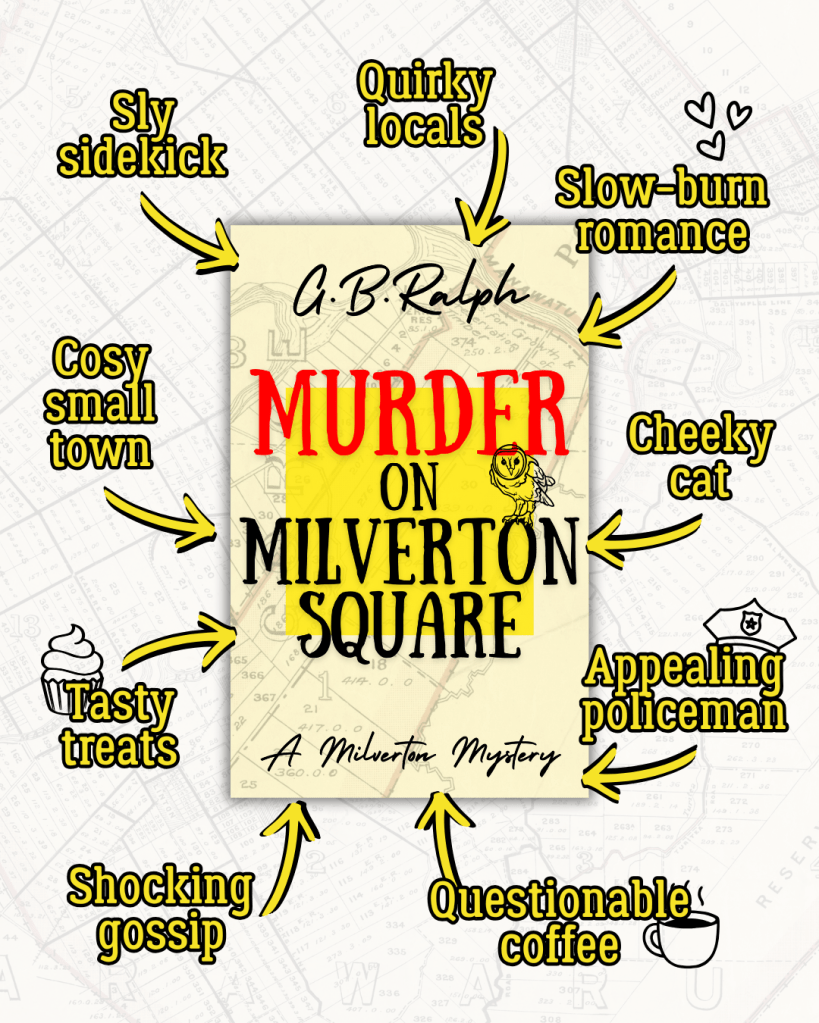
As an example, here are some of the tropes you’ll find in my first mystery, Murder on Milverton Square, which mostly come from the cosy end of the mystery genre but there are also a couple from the romance genre too:
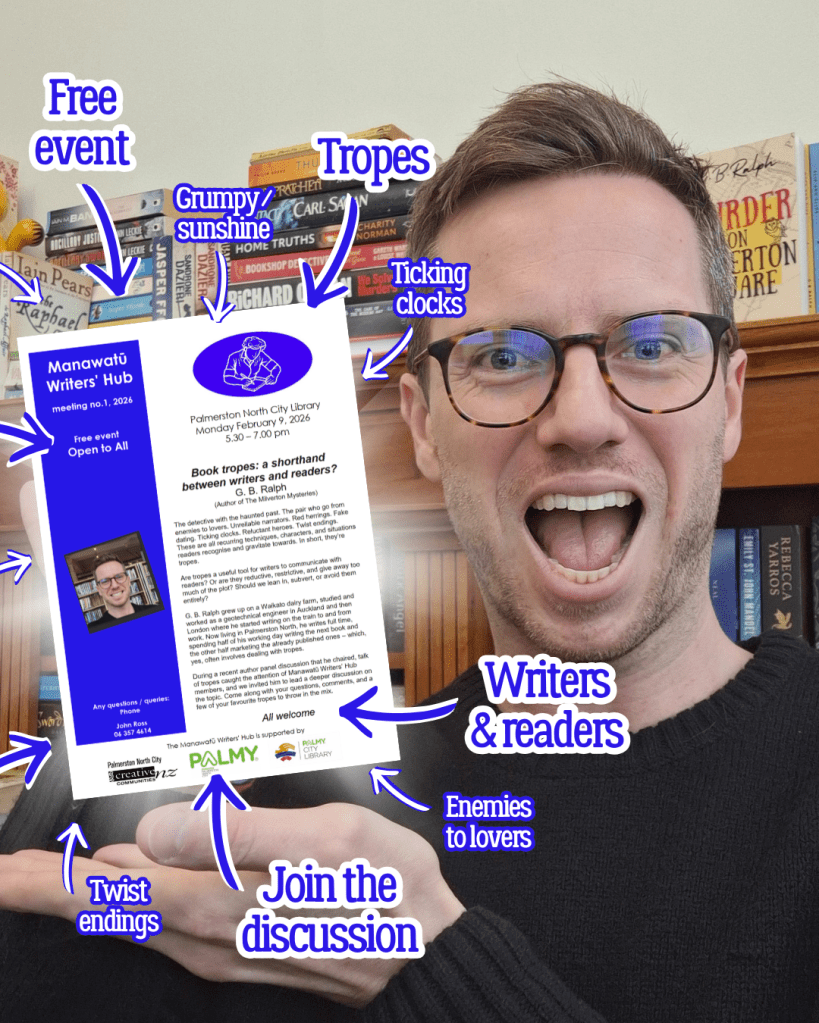
I’m leading a discussion on book tropes at the library on Monday evening. I’ll be asking if they’re a useful tool for writers to communicate with readers or if they’re reductive, restrictive, and give away too much of the plot.
Writers and readers, I’d love to see you there!
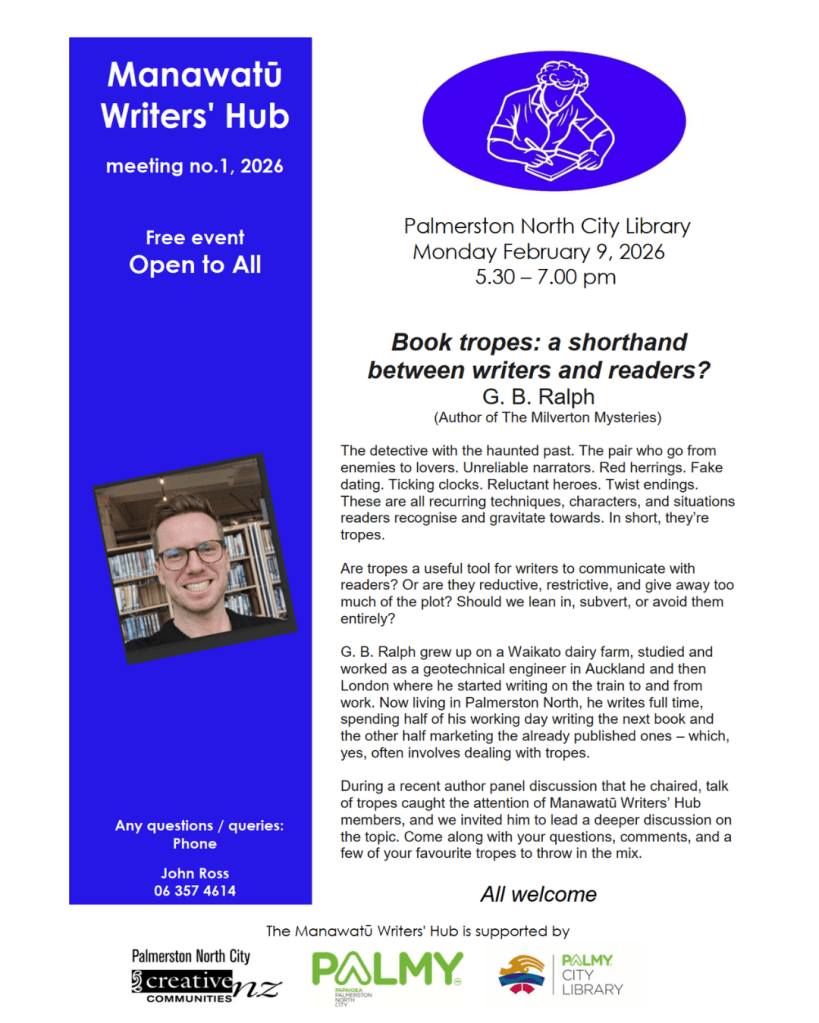
Key event details
What? Manawatū Writers’ Hub meeting
Where? Palmerston North City Library
When? 5:30–7pm, Monday 9 February 2026
Cost? Free event, open to all
Topic? Book tropes: a shorthand between writers and readers?
Presenter? G. B. Ralph, author of The Milverton Mysteries
Description:
The detective with the haunted past. The pair who go from enemies to lovers. Unreliable narrators. Red herrings. Fake dating. Ticking clocks. Reluctant heroes. Twist endings. These are all recurring techniques, characters, and situations readers recognise and gravitate towards. In short, they’re tropes.
Are tropes a useful tool for writers to communicate with readers? Or are they reductive, restrictive, and give away too much of the plot? Should we lean in, subvert, or avoid them entirely?
G. B. Ralph grew up on a Waikato dairy farm, studied and worked as a geotechnical engineer in Auckland and then London where he started writing on the train to and from work. Now living in Palmerston North, he writes full time, spending half of his working day writing the next book and the other half marketing the already published ones – which, yes, often involves dealing with tropes.
During a recent author panel discussion that he chaired, talk of tropes caught the attention of Manawatū Writers’ Hub members, and we invited him to lead a deeper discussion on the topic. Come along with your questions, comments, and a few of your favourite tropes to throw in the mix.
All welcome.
Event poster
 G. B. Ralph